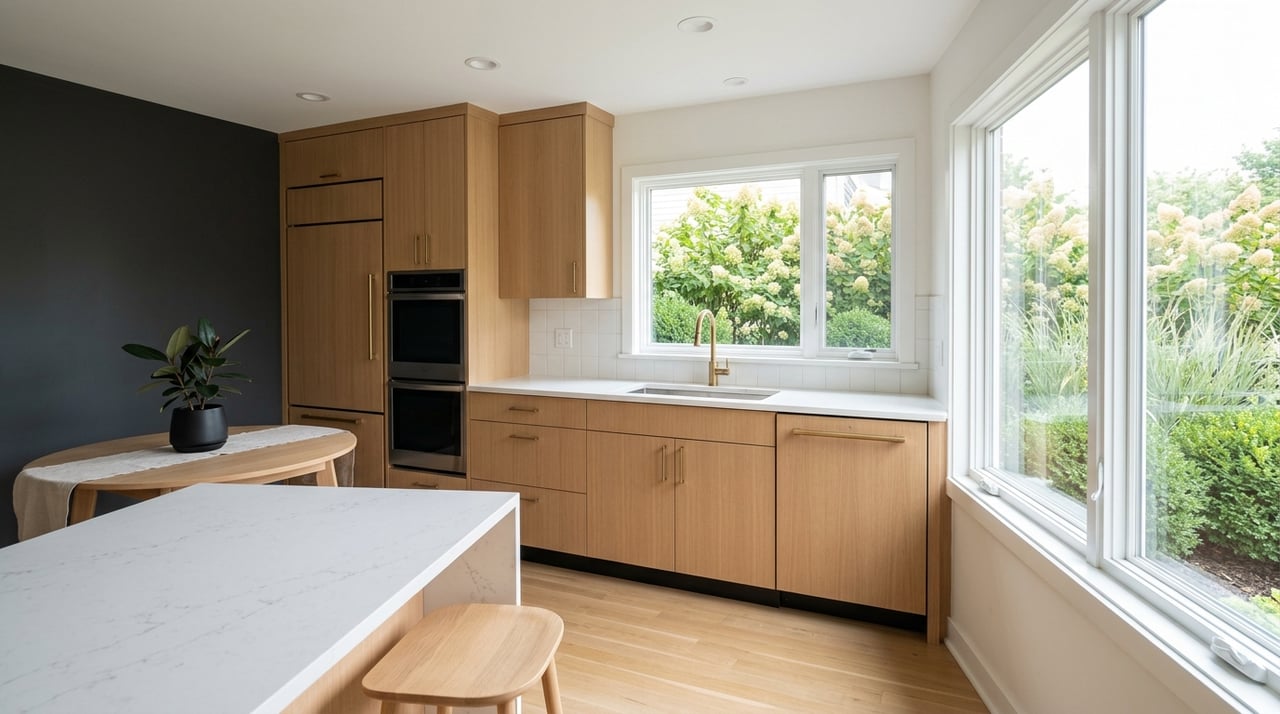
If you are thinking about selling in Albany, the biggest mistake you can make right now is assuming every part of the market is moving the same way. The latest local data shows a market that still favors sellers in many cases, but not in a blanket, automatic sense. If you understand the signals buyers are responding to, you can make better decisions about pricing, timing, and preparation. Let’s dive in.
Albany market signals to watch
When sellers hear that inventory is low or homes are still moving quickly, it is easy to think that any listing should do well. The more accurate story is that Albany County, the City of Albany, and the broader region are related markets, but they are not identical.
That distinction matters. In early June 2026, public data from the Greater Capital Association of REALTORS® showed tight supply across the area, but price growth and sales patterns were not exactly the same in each geography. For you as a seller, that means local context matters more than headlines.
Albany County vs. City of Albany
In May 2026, Albany County posted 298 new listings, 160 closed sales, a median sales price of $334,000, 19 days on market, 249 homes in inventory, and 1.3 months of supply. Sellers in the county also received 102.1% of original list price on closed sales for the month.
The City of Albany showed 63 new listings, 44 closed sales, a median sales price of $267,200, 23 days on market, 55 homes in inventory, and 1.2 months of supply. Like the county, the city also showed 102.1% of original list price received in May.
Those numbers point to a market that remains competitive, but they do not mean every home is flying off the shelf. Year-to-date, median sales price was up 5.4% in Albany County and 1.1% in the City of Albany, while closed sales volume was down in both. That is a strong clue that the market is selective.
What tight inventory means for you
Low inventory is still one of the clearest seller-friendly signals in Albany. In the broader region, May 2026 inventory was down 7.7% year over year to 1,975 homes, and months supply was down to 2.2 months.
Albany County and the City of Albany were tighter still, at 1.3 and 1.2 months of supply. In plain language, buyers still have limited choices, which can support strong interest when a home is priced and presented well.
Tight does not mean effortless
Even with low supply, buyers are not responding the same way to every listing. The data suggests that some homes are attracting quick, strong offers, while others may sit longer if they miss the mark on price, condition, or presentation.
That is why “seller’s market” can be misleading if you treat it as a guarantee. Tight inventory helps, but it does not replace strategy.
Days on market still matter
Another important signal is speed. In the broader Albany region, days on market fell 9.7% year over year to 28 days in May 2026. Albany County was even faster at 19 days, while the City of Albany came in at 23 days.
For sellers, this gives you a practical benchmark. If your home is sitting much longer than similar local listings, that often points to a property-specific issue rather than a broad market slowdown.
What a slower listing may be telling you
A home that lingers on the market in a low-supply environment may be sending a message. Common reasons include:
- Pricing that started too high
- Photos or presentation that do not show the home well
- Condition issues that buyers notice quickly
- A mismatch between the home and current buyer demand in that price range or property type
This is where local reading of the data matters. The market may still be moving, but not every segment is moving at the same pace.
Over-asking sales need context
Many sellers want to know one thing first: are homes still selling over asking? The answer is yes, sometimes, but that should not be your only takeaway.
In May 2026, both Albany County and the City of Albany showed sellers receiving 102.1% of original list price on closed sales. That tells you some homes were clearly able to command strong terms.
Why year-to-date numbers matter too
A single month can look hotter or softer than the full trend, especially in smaller markets. Year-to-date figures paint a more balanced picture, with percent of original list price received at 99.3% countywide and 98.8% in the city.
That nuance is important. Over-ask sales are happening, but the broader market looks closer to asking price than to an across-the-board bidding war. If you price too aggressively based on one standout sale, you may reduce your momentum right out of the gate.
Price bands shape buyer behavior
One of the most useful signals in the current market is how differently homes can perform by price point. According to the local first-quarter housing supply overview, homes in the $225,001 to $400,000 range tended to sell the fastest, averaging 25 days.
At the lower end, homes priced at $125,000 and below tended to sell the slowest, averaging 51 days. That does not mean lower-priced homes cannot sell well. It means buyer behavior is not evenly distributed across every segment.
What that means for your pricing strategy
If your home fits into a faster-moving band, you may have room to benefit from strong demand, but only if your pricing supports early activity. If your home is in a slower-moving segment, you may need even more care with presentation and launch strategy.
This is one reason broad market headlines can lead sellers in the wrong direction. Your likely outcome depends less on the average and more on where your home fits.
Property type can change the story
Supply also varies by property type. In the first quarter of 2026, single-family homes and townhomes across the Capital Region were at 1.6 months of supply, while condominiums and other property types were at 3.0 months.
That difference matters if you are selling a condo or attached home. More available options in that segment can give buyers more room to compare, which may put extra pressure on pricing, condition, and marketing.
Why one-size-fits-all advice falls short
A single-family home in a tight segment may need a different plan than a condo with more competing inventory. The same goes for an entry-level home compared with a move-up property.
The key takeaway is simple: you want your pricing and prep plan built around your specific home, not just a citywide statistic.
Seasonality still matters in Albany
Spring remains the clearest launch window in the current data, but it is not a magic fix. In Albany County, inventory rose from 172 homes in March 2026 to 249 in May, while months supply increased from 0.9 to 1.3.
At the same time, new listings climbed from 192 in March to 298 in May, and days on market improved. That pattern shows what many sellers already feel intuitively: spring brings more activity, but also more competition.
Timing helps, but preparation matters more
Listing at the right time can improve your odds of strong early attention. Still, timing alone does not carry a listing.
A well-prepared home can perform well outside peak spring conditions, while a poorly positioned home can struggle even during a busy season. The strongest sellers right now are the ones who combine timing with realistic pricing and thoughtful presentation.
What Albany sellers should do now
If you are planning to sell in Albany County or the City of Albany, today’s market signals point to a clear strategy. Focus on the factors you can control, and let the local data shape the rest.
Here are four smart steps to consider:
- Watch your exact market segment. County, city, price point, and property type all matter.
- Price for the market you have, not the headline you heard. Some homes are selling over ask, but many are landing much closer to asking price.
- Prepare for a strong first impression. In a selective market, photos, condition, and presentation matter.
- Use timing as an advantage, not a shortcut. Seasonal demand helps, but strategy still drives the outcome.
The bottom line for Albany sellers
The current Albany-area market is not simply hot or cold. It is tight, fast in many segments, and still favorable for sellers in many cases, but it is also more selective than broad headlines suggest.
That is good news if you are willing to approach your sale with a plan. When you understand inventory, days on market, list-to-sale patterns, and seasonal timing, you can make decisions based on what buyers are actually doing right now.
If you want local, practical guidance on how your home fits into today’s Albany market, Shari Fox offers hands-on support, responsive communication, and a data-driven approach to pricing, preparation, and negotiation.
FAQs
What do current Albany market signals mean for home sellers?
- Current Albany market signals suggest conditions still lean seller-friendly, especially with low inventory and relatively short days on market, but results vary by location, price point, and property type.
Is Albany County the same as the City of Albany for pricing and demand?
- No. Recent local data shows Albany County and the City of Albany have similar supply constraints, but different median prices, different days on market, and different year-to-date price growth.
Are Albany homes still selling over asking price?
- Some are. In May 2026, both Albany County and the City of Albany showed 102.1% of original list price received, but year-to-date figures were closer to asking price overall.
How fast are homes selling in Albany right now?
- In May 2026, homes averaged 19 days on market in Albany County and 23 days in the City of Albany, which suggests many well-positioned listings are still moving quickly.
Does timing matter when selling a home in Albany?
- Yes. Spring has shown stronger listing activity and faster market movement, but timing alone is not enough. Pricing, preparation, and presentation still play a major role.
Should Albany sellers price high because inventory is low?
- Not automatically. Low inventory helps sellers, but the market is selective, and overpricing can slow your momentum if your home does not match buyer expectations in its segment.