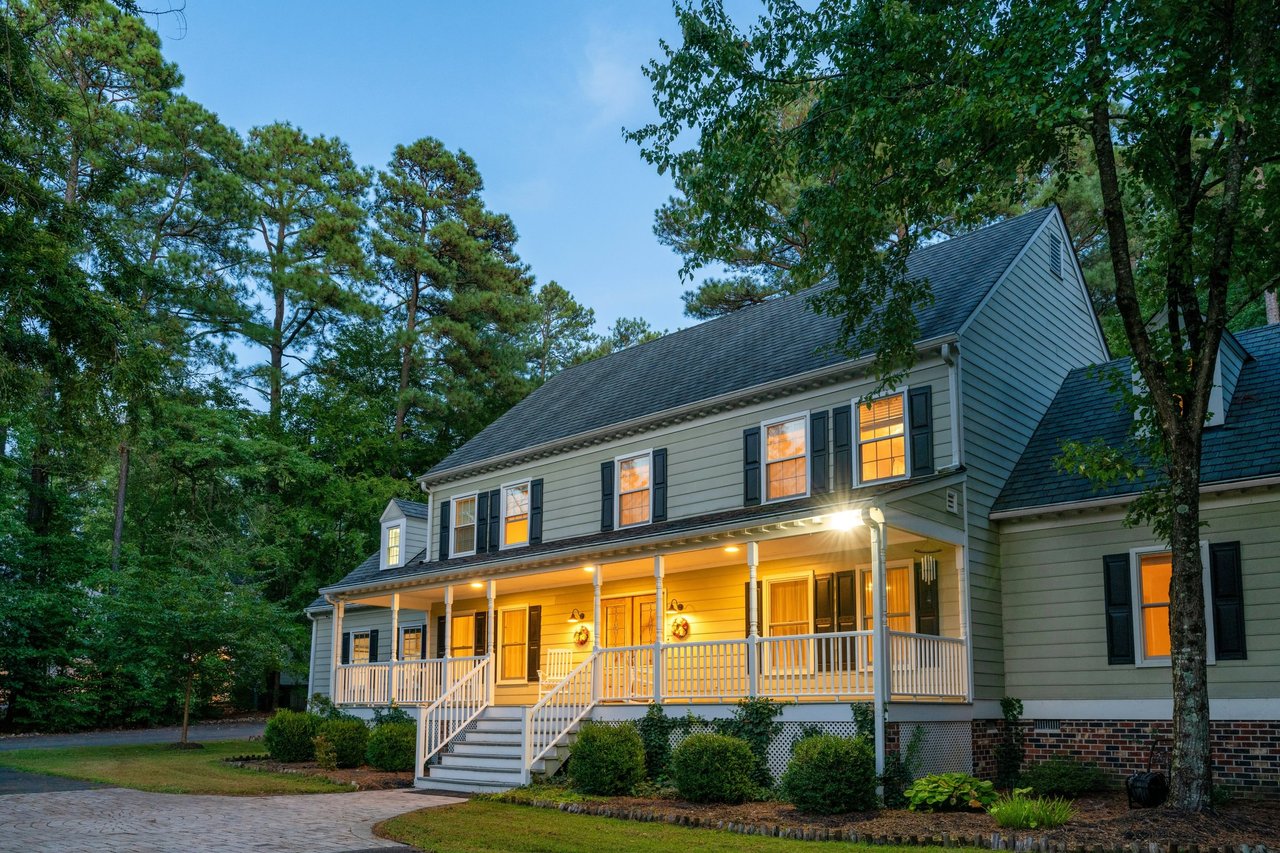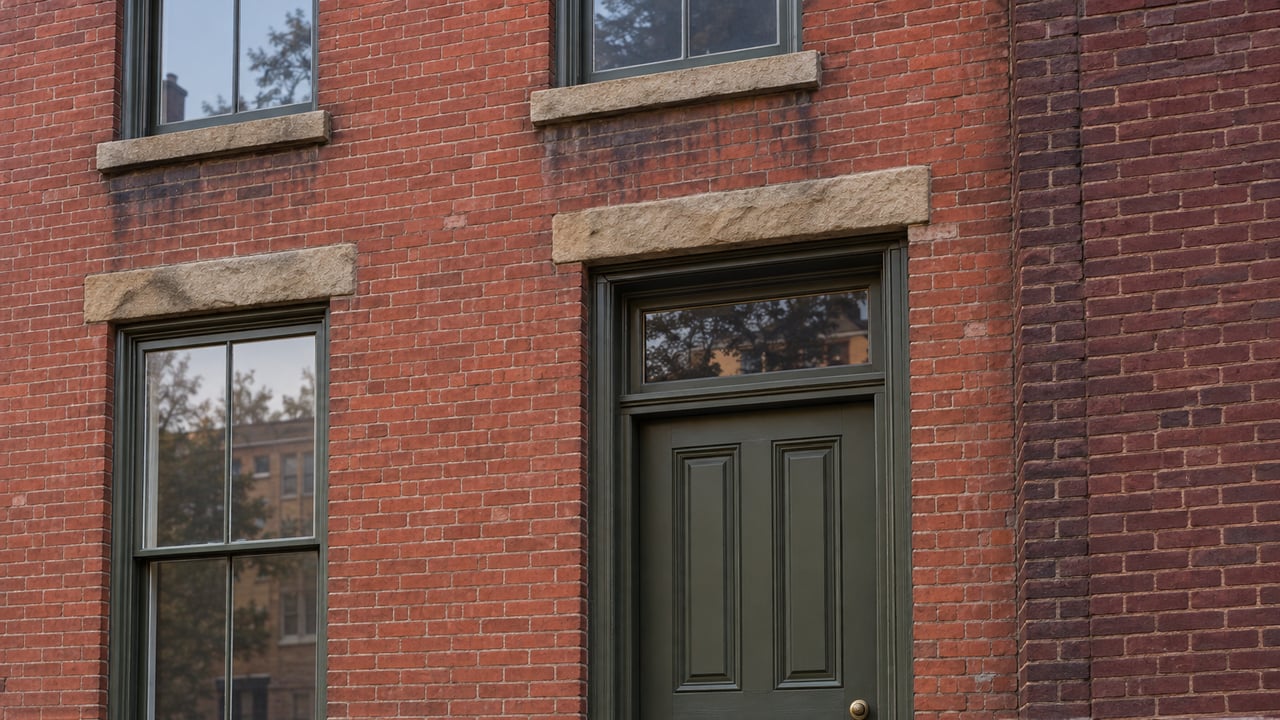
A buyer under contract on a Clinton Avenue rowhouse calls her agent two weeks before closing. She wants the rear kitchen window swapped before move-in. The contractor is booked, the window is ordered, and then the paperwork stops everything. The house sits inside a locally designated historic district, so the City of Albany's Building and Regulatory Compliance guidance says that window swap needs a Certificate of Appropriateness application alongside a standard building permit, and that review does not happen on the contractor's schedule.
This kind of surprise is common in Albany's historic neighborhoods, and it is getting more common for a specific reason. Two separate rules governing the city's older rowhouse stock changed in March 2024 and 2025: the New York State Association of REALTORS® reported the disclosure-law change, and the Preservation League of New York State reported the historic-credit change. Most people researching these houses right now are reading articles written before either update took effect. The paperwork sellers must hand over got heavier at almost the same moment the financial help for fixing what that paperwork discloses got smaller. That combination, not the architecture, is the thing to understand before you write or accept an offer on a house in Center Square, Ten Broeck Triangle, Clinton Avenue, or the Mansion neighborhood.
Four Names, One Rulebook
Albany's Historic Resources Commission oversees roughly 3,600 designated resources across the city, a reach that goes back to the preservation ordinance the city adopted in 1983 following New York's 1980 Historic Preservation Act. Buyers should check whether a given older Albany rowhouse falls under commission review.
The district names carry different housing stock and different ages.
| District | Building stock | Predominant era |
|---|---|---|
| Center Square-Hudson Park | About 1,200 buildings, only 22 considered noncontributing | Two-to-four story brick rowhouses |
| Ten Broeck Triangle, part of Arbor Hill | Over 200 buildings | 1840s to 1870s |
| Clinton Avenue | Nearly 600 buildings, 92 percent are 19th-century rowhouses | Predominantly Italianate |
| Mansion | Mixed 19th-century styles | Italianate, Greek Revival, Gothic Revival |
The city's own boundary map extends locally designated status well beyond these four, reaching Lark Street, Lexington Avenue, Knox Street, and Upper Madison Avenue among others. A buyer touring rowhouses across several of these pockets is very likely touring several different review zones in the same afternoon, each governed by the same commission but each with its own building stock and age profile.
What A Certificate Of Appropriateness Actually Requires
The City of Albany's guidance says any exterior work inside a Historical Overlay District requires a Certificate of Appropriateness Application submitted alongside the standard building permit. This is separate from, not instead of, the permit process a buyer would expect for the same project on a house outside a district boundary.
The kinds of work that trigger review are the ones people assume are routine maintenance:
- Window replacement
- Roofing material changes
- Siding
- Front stairs or porch alterations
- Facade features generally
A buyer's first renovation after closing can be the first place the historic designation shows up in daily life. The practical effect is timing. A rewiring project or a lead abatement job that would take a few weeks anywhere else in the Capital Region needs review time built in Albany's districts before a contractor can start on the exterior-facing pieces.
The Disclosure Law Changed While You Were House Hunting
The New York State Association of REALTORS® reports that sellers of one-to-four family residential property in New York can no longer opt out of the state's Property Condition Disclosure Statement by handing a buyer a $500 credit at closing. Cuddy & Feder's overview of the amendment reports that the form grew at the same time, from 48 questions to 56, with the new questions covering flood history and flood zone status.
What remains is a real disclosure obligation.
For the exact housing stock these Albany districts protect, this lands harder than it would on a newer subdivision. The form asks about structural issues, mechanical systems, and environmental conditions, and on a rowhouse built in the 1850s or 1860s those categories routinely include the two things a Capital Region home inspector flags on sight: pre-1978 lead paint and knob-and-tube wiring. Knob-and-tube is an early wiring method using ceramic knobs and tubes rather than a modern grounded cable, and its presence increasingly affects more than the inspection report. Many insurers now refuse new policies for homes with active knob-and-tube, require an inspection before renewing coverage, or charge higher premiums, and mortgage lenders flag it during underwriting. For buyers considering these older homes, confirming the wiring condition early can help clarify potential insurance and financing questions.
The Historic Homeowner Tax Credit Changed in 2025
The New York State Department of Taxation and Finance describes the Historic Homeowner Tax Credit as reimbursing 20 percent of qualifying rehabilitation costs on a home listed individually or as a contributing building in a historic district, as long as the property sits in a qualifying census tract and the project spends at least $5,000. Until January 1, 2025, the annual cap on that credit was $50,000, and the credit was refundable for owners with adjusted gross income at or below $60,000.
As of January 1, 2025, the annual cap dropped to $25,000 and the refundability provision for lower-income owners expired. The Preservation League of New York State has been lobbying to restore the credit to its pre-2025 terms, and the Assembly's FY2027 one-house budget bill reportedly includes language to do that, but as of this writing the restoration has not been enacted.
This is the part of the story that ties the other two together. A full rewire replacing knob-and-tube across a multi-story rowhouse, or lead abatement across original woodwork and plaster, can be a major expense. With the annual cap now lower, owners planning qualifying rehabilitation should check how much of the credit they may receive under the current rules. Buyers evaluating a property with needed repairs should consider the repair costs alongside the disclosure information.
What This Means If You're Already In Contract
A few things are worth doing before your closing date arrives, whichever side of the transaction you're on.
If you're buying, ask for the Property Condition Disclosure Statement and consider a targeted electrical inspection if the wiring answers are vague. If the house needs rewiring or lead work, get a contractor estimate and check it against the current credit cap rather than assuming the number quoted in an older blog post still applies. If you're planning any exterior change, from a window to a porch rail, call Albany's Department of Planning and Development before you schedule the contractor.
If you're selling, loop your agent in early enough to gather your actual wiring, plumbing, and environmental history before the disclosure form is due. Use those records to answer each item as accurately as you can, and flag anything you cannot verify for your agent.
Frequently Asked Questions
What changed in New York's disclosure requirements? The statewide change removed an opt-out option for some residential sales.
Can a building in a historic district qualify for the credit? Yes. A contributing building in a listed historic district may qualify, subject to the program's eligibility requirements.
Does the Certificate of Appropriateness process apply to interior renovations? The city guidance discussed here addresses exterior work; ask Albany's Department of Planning and Development about a specific project.
If you're weighing an offer on a rowhouse in Center Square, Ten Broeck Triangle, Clinton Avenue, or the Mansion neighborhood, I can walk through the disclosure timeline and the permitting steps with you before you're up against a contract deadline. Reach out to Shari Fox and let's connect.
This article is general information, not legal, tax or financial advice. Consult a qualified professional about your situation.